| 브랜드 이름: | Convertzyme 260D |
The Pulp and Paper Enzymes are specialized biocatalysts designed to optimize various processes within the pulp and paper industry. These enzymes play a crucial role in enhancing the efficiency and quality of paper production, particularly in applications involving surface sizing. Surface sizing enzyme is a key component that improves the paper's surface properties, such as strength, printability, and resistance to water and ink penetration. By incorporating the surface sizing enzyme into the papermaking process, manufacturers can achieve superior product performance and reduce the reliance on harsh chemical treatments.
Available in both liquid and powder forms, these enzymes offer flexibility to suit different manufacturing environments and operational preferences. The liquid form provides ease of application and rapid dispersion, whereas the powder form is ideal for long-term storage and controlled dosing. Regardless of the form selected, the purity of the Pulp and Paper Enzymes is guaranteed to be at least 99% minimum, ensuring high activity and consistent results in industrial applications.
The optimal pH range for the effective function of these enzymes is between 6.0 and 9.0. This pH range aligns well with typical pulp and paper processing conditions, allowing the surface sizing enzyme to maintain stability and catalytic efficiency. Adjusting the pH within this range ensures maximum enzymatic activity, contributing to improved fiber bonding and enhanced surface characteristics of the final paper product.
Dosage of the Pulp and Paper Enzymes varies depending on the specific application and desired outcome. Typically, the recommended dosage ranges from 0.1% to 1% by weight of the pulp. This dosage flexibility allows manufacturers to tailor enzyme usage to their unique process requirements, optimizing cost-effectiveness while achieving the desired level of surface modification. Using the surface sizing enzyme at the appropriate dosage ensures better retention of sizing agents on the paper surface, resulting in enhanced durability and performance.
To maintain the integrity and activity of the enzymes, it is crucial to store them properly. The recommended storage conditions are in a cool, dry place away from direct sunlight. Exposure to heat, moisture, or sunlight can degrade enzyme activity, reducing their effectiveness in the pulp and paper process. Proper storage extends the shelf life of the product and preserves its high purity, ensuring that the surface sizing enzyme remains potent until it is used.
In summary, Pulp and Paper Enzymes represent a vital advancement in the papermaking industry, providing eco-friendly and efficient solutions for enhancing paper quality. The surface sizing enzyme, in particular, is instrumental in improving surface properties, contributing to superior paper strength and printability. With a high purity of 99% minimum, availability in liquid or powder form, a practical pH range of 6.0 to 9.0, and flexible dosage options, these enzymes offer versatile and effective performance. Proper storage in a cool, dry environment away from sunlight ensures long-lasting activity, making these enzymes a reliable choice for modern pulp and paper manufacturing processes.
| Density | 1.0-1.3g/ml (Liquid) |
| Dosage | Varies Depending On Application, Typically 0.1% - 1% By Weight Of Pulp |
| Purity | 99% min |
| Shelf Life | 6 To 12 Months |
| Optimal pH | 4.5 - 7.5 |
| Form | Liquid Or Powder |
| Type | Powder / Liquid |
| Classification | Feed Enzyme |
| Storage Conditions | Store In A Cool, Dry Place Away From Direct Sunlight |
| Einecs No | 232-800-2 |
| This surface sizing enzyme is designed for optimal performance in pulp and paper applications. As a surface sizing enzyme, it enhances paper quality effectively. The surface sizing enzyme provides excellent results under varied conditions. |
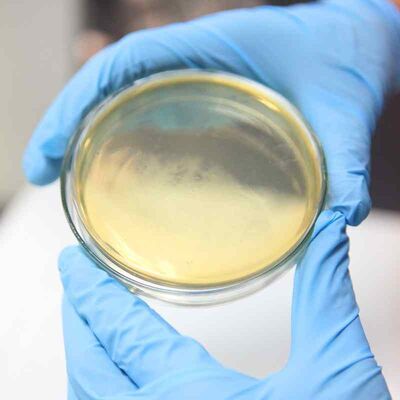
Convertzyme 260D, a high-quality Pulp And Paper Enzymes product, is specially formulated as a feed enzyme to enhance the efficiency and quality of pulp and paper manufacturing processes. Its light brown liquid appearance allows for easy handling and precise dosing, which typically varies between 0.1% and 1% by weight of pulp depending on the specific application. The enzyme operates optimally within a pH range of 4.5 to 7.5, making it suitable for a wide variety of pulp processing environments.
One of the primary application occasions for Convertzyme 260D is in the surface sizing process, where the surface sizing enzyme plays a crucial role. Surface sizing enzymes improve the paper’s surface properties by enhancing the bonding of sizing agents to the fibers. This results in better printability, increased resistance to water penetration, and improved overall paper strength. Using Convertzyme 260D as a surface sizing enzyme ensures consistent sizing performance, reducing the need for excessive chemical additives and lowering production costs.
In addition to surface sizing, Convertzyme 260D is ideal for various other scenarios in the pulp and paper industry. It can be employed during pulp washing and bleaching stages to remove residual lignin and hemicellulose efficiently, leading to higher brightness and cleaner pulp. The enzyme also aids in deinking recycled paper, facilitating the removal of ink particles and contaminants, thereby improving the quality and appearance of recycled paper products.
The versatility of Convertzyme 260D as a surface sizing enzyme and feed enzyme allows it to be integrated into different manufacturing setups, including both mechanical and chemical pulping processes. Its adaptability to different dosages ensures that manufacturers can optimize enzyme use based on the type of pulp, desired paper quality, and production scale. Overall, Convertzyme 260D’s role as a surface sizing enzyme and pulp processing aid makes it an indispensable product for improving operational efficiency, reducing environmental impact, and producing high-quality paper products.
Our product customization services for Convertzyme 260D, a premium Pulp And Paper Enzymes solution, are designed to meet your specific industrial needs. This surface sizing enzyme is available in both powder and liquid forms, offering flexibility in application. The light brown liquid appearance ensures easy identification and handling during processing. With an optimal pH range of 6.0-9.0, Convertzyme 260D delivers consistent performance in various pulp and paper manufacturing conditions. We provide tailored formulations and packaging options to suit your production requirements, ensuring the surface sizing enzyme functions effectively. To maintain product quality, it is recommended to store Convertzyme 260D in a cool, dry place away from direct sunlight. Trust our customization services to optimize your use of this essential surface sizing enzyme in your pulp and paper processes.
Our Pulp and Paper Enzymes are supported by a dedicated technical team committed to helping you optimize your production processes. We provide expert guidance on enzyme selection, application methods, and dosage optimization to enhance pulp quality, increase yield, and reduce environmental impact.
Our services include on-site trials, process audits, and customized training programs to ensure seamless integration of enzymes into your manufacturing workflow. We also offer troubleshooting assistance and continuous monitoring to maintain peak enzyme performance and achieve consistent results.
With a focus on innovation and sustainability, our technical support aims to help you reduce chemical usage, lower energy consumption, and improve overall operational efficiency. Partner with us to leverage advanced enzymatic solutions tailored to meet the specific needs of your pulp and paper production.
Q1: What is Convertzyme 260D used for in the pulp and paper industry?
A1: Convertzyme 260D is an enzyme specially formulated to enhance the efficiency of pulp processing by improving fiber modification, reducing chemical usage, and increasing overall paper quality.
Q2: How does Convertzyme 260D improve paper production?
A2: Convertzyme 260D works by breaking down specific components in the pulp, which helps in better fiber bonding, reduces pitch problems, and results in a smoother, stronger paper surface.
Q3: Is Convertzyme 260D compatible with all types of pulp?
A3: Convertzyme 260D is designed to be effective with various pulp types including hardwood, softwood, and recycled pulp, making it versatile for different paper manufacturing processes.
Q4: What is the recommended dosage for Convertzyme 260D?
A4: The optimal dosage of Convertzyme 260D varies depending on the specific pulp type and processing conditions, but typical usage ranges from 0.1% to 0.5% of the dry pulp weight. It is advised to conduct trials to determine the best concentration.
Q5: How should Convertzyme 260D be stored?
A5: Convertzyme 260D should be stored in a cool, dry place away from direct sunlight and extreme temperatures to maintain its enzymatic activity and shelf life.